- Vinisha M
- 21 May 2026
Heavy Rains in Kerala: What Every Property Buyer Should Check Before Investing in Kerala Real Estate
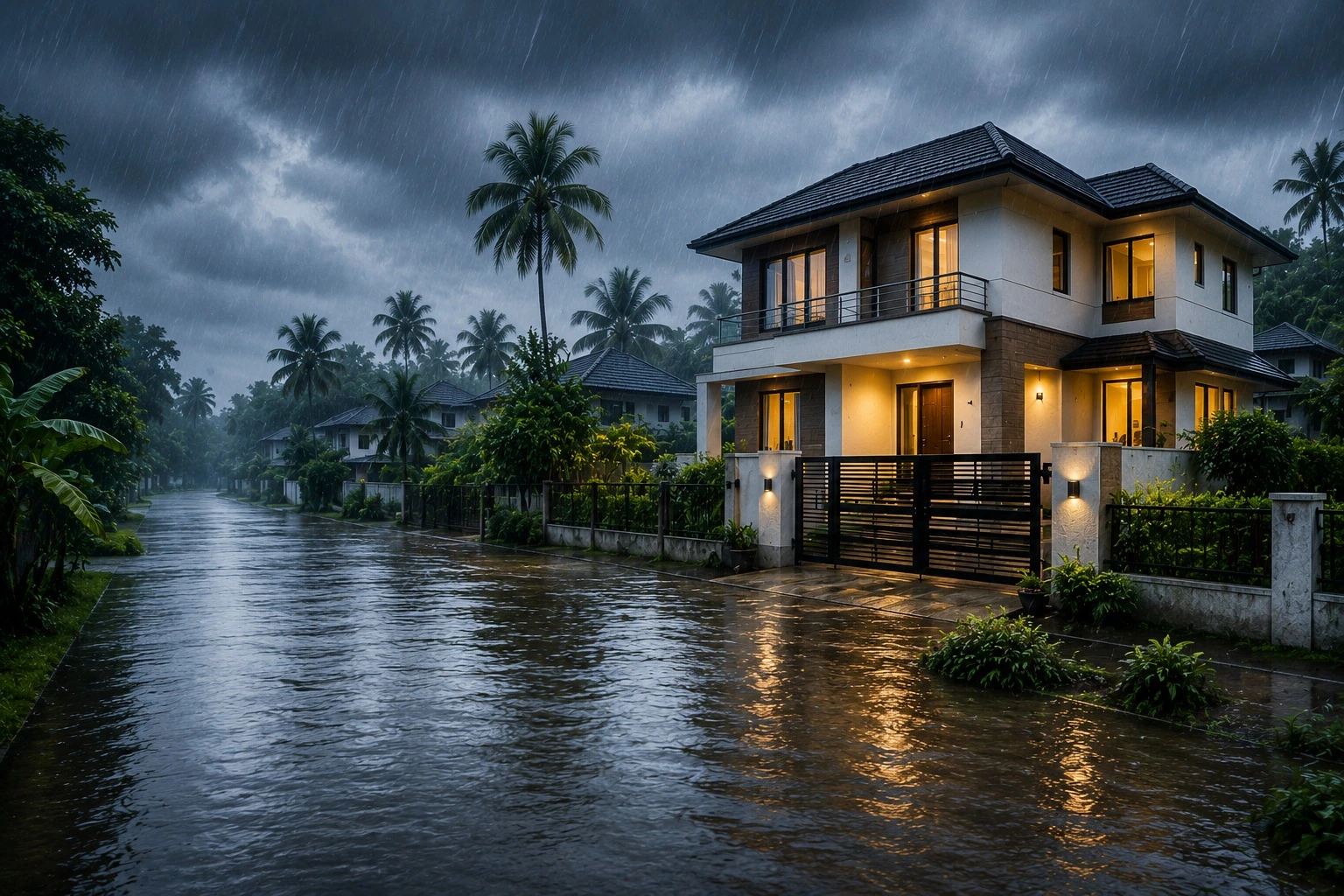
Kerala’s monsoon season is both beautiful and challenging. While the rains bring greenery, cooler temperatures, and full rivers, they also expose the vulnerabilities of many residential areas and properties. In recent years, heavy rainfall, waterlogging, floods, and landslides have become major concerns across different districts in Kerala. Because of this, property buyers today are becoming more cautious before making investments in the Kerala real estate market.
Whether you are planning to buy a house, apartment, villa, or residential land, understanding how a property performs during the monsoon is extremely important. A property that looks perfect during summer may face serious issues during heavy rains. Smart buyers in the Kerala real estate sector now consider climate-related factors as seriously as price, location, and amenities.
Here are the most important things every property buyer in Kerala should check before investing during the rainy season.
1. Check the Flood History of the Area
The first thing buyers should investigate is whether the area has experienced flooding in the past. Kerala has witnessed severe floods in recent years, and many low-lying regions remain vulnerable during heavy monsoon periods.
Before purchasing a property:
Ask local residents about previous flooding incidents
Check whether nearby roads get waterlogged
Verify if water entered nearby homes during recent monsoons
Research flood-prone zones in the district
Even if the property itself seems elevated, nearby flooding can affect accessibility, drainage, and overall living conditions. Areas near rivers, canals, and low-lying wetlands require extra caution.
2. Evaluate the Drainage System
Poor drainage is one of the biggest problems faced by homeowners during heavy rains. Water stagnation not only damages roads and buildings but also creates hygiene and mosquito issues.
A good property should have:
Proper rainwater drainage channels
Well-maintained roadside drains
Efficient slope for water flow
No standing water around the property
When visiting a property, pay attention to the surrounding environment. If possible, inspect the area during or immediately after rainfall. This gives a realistic understanding of how the locality handles heavy rain.
3. Verify Soil Stability and Land Type
For buyers investing in residential plots or hillside properties, soil condition is extremely important. Certain regions in Kerala are vulnerable to landslides and soil erosion during intense rainfall.
Things to check include:
Whether the land was reclaimed from paddy fields or wetlands
Signs of soil erosion or loose terrain
Retaining walls in hilly areas
Stability of nearby slopes and embankments
Building on unstable land can lead to serious structural risks in the future. Buyers should consult local engineers or experts before investing in such properties.
4. Inspect the Building Quality
Heavy rains can quickly expose poor construction quality. Leakage, damp walls, cracked roofing, and weak foundations are common issues seen in poorly built homes.
Before purchasing a house or apartment, carefully inspect:
Roof condition and waterproofing
Wall cracks or moisture patches
Quality of doors and windows
Basement leakage
Plumbing and drainage connections
Fresh paint can sometimes hide moisture damage, so buyers should inspect carefully. If needed, hire a professional building inspector to evaluate the structure.
5. Understand Waterlogging Risks Around the Property
Many residential areas in Kerala face temporary waterlogging during continuous rain. Even a few inches of standing water can create long-term problems for residents.
Check:
Road accessibility during heavy rain
Parking area drainage
Ground floor water entry risk
Nearby canals or blocked drains
Apartment buyers should especially verify whether parking areas or basements flood during monsoon months.
6. Confirm Availability of Essential Infrastructure
Rainy seasons often test the strength of local infrastructure. A property may appear attractive, but poor infrastructure can create difficulties during monsoon periods.
Important factors include:
Road quality and connectivity
Electricity reliability during storms
Internet and mobile network stability
Availability of nearby hospitals and emergency services
Public transportation access
Properties in well-developed areas generally recover faster from heavy rain disruptions compared to poorly planned localities.
7. Check for Legal Approvals and Environmental Compliance
Some properties are built in environmentally sensitive or restricted areas. Buying such properties can create future legal complications.
Before investing, verify:
Land ownership documents
Building permits and approvals
Environmental clearances if required
Zoning regulations
Encumbrance certificate
Illegal land filling, wetland conversion, or unauthorized construction can become major problems later, especially after environmental inspections following floods or landslides.
8. Assess the Elevation of the Property
Elevation plays a major role in flood safety. Properties located slightly above road level generally perform better during heavy rainfall.
Buyers should observe:
Whether the house is elevated from the road
Slope direction around the property
Natural water flow patterns
Nearby ponds, canals, or drainage outlets
Low-lying properties may appear affordable, but they can lead to repeated maintenance and repair expenses.
9. Understand Insurance and Maintenance Costs
Climate-related risks can increase property maintenance costs over time. Homes exposed to excessive moisture may require regular repairs and waterproofing work.
Buyers should consider:
Annual maintenance expenses
Waterproofing requirements
Home insurance availability
Flood insurance options if applicable
Investing slightly more in a well-protected property can reduce long-term financial burden.
10. Visit the Property During Rainy Season
One of the smartest decisions a buyer can make is visiting the property during the monsoon itself. Many hidden problems only become visible during heavy rainfall.
During the visit, observe:
Water accumulation around the property
Roof leakage or dampness
Road conditions
Traffic and accessibility
Drainage efficiency
This real-time inspection gives buyers much better clarity than a summer site visit.
Why Climate Awareness Matters in Kerala Real Estate
Climate awareness is becoming an important part of property investment decisions in Kerala. Buyers are no longer focusing only on square footage, interiors, or location popularity. Safety, sustainability, and long-term livability are now equally important in the Kerala real estate market.
Properties built with proper planning, drainage systems, quality construction, and environmental consideration tend to maintain better value over time. On the other hand, homes in flood-prone or poorly planned areas may face reduced demand and higher maintenance costs in the future.
Developers and sellers in the Kerala real estate industry are also increasingly highlighting climate-resilient features such as:
Elevated foundations
Rainwater harvesting systems
Better drainage design
Waterproof construction materials
Sustainable landscaping
These features not only improve safety but also increase long-term property value.
Conclusion
Buying property in Kerala is a major investment, and the monsoon season offers valuable insights into the true condition of a property and its surroundings. Heavy rains can reveal issues that remain hidden during dry months, making climate awareness an essential part of smart property buying in the Kerala real estate sector.
Before making a decision, buyers should thoroughly inspect the location, drainage systems, flood history, construction quality, and legal approvals. Taking extra precautions today can help avoid expensive problems in the future.
A good property is not just about appearance or price — it should also provide safety, comfort, and peace of mind during Kerala’s toughest rainy days.


Trending Property Searches in Kerala
Categories
Categories