- Vinisha M
- 18 Jul 2026
Buy House in Kerala: What Every Home Buyer Should Learn from the Wayanad Landslide
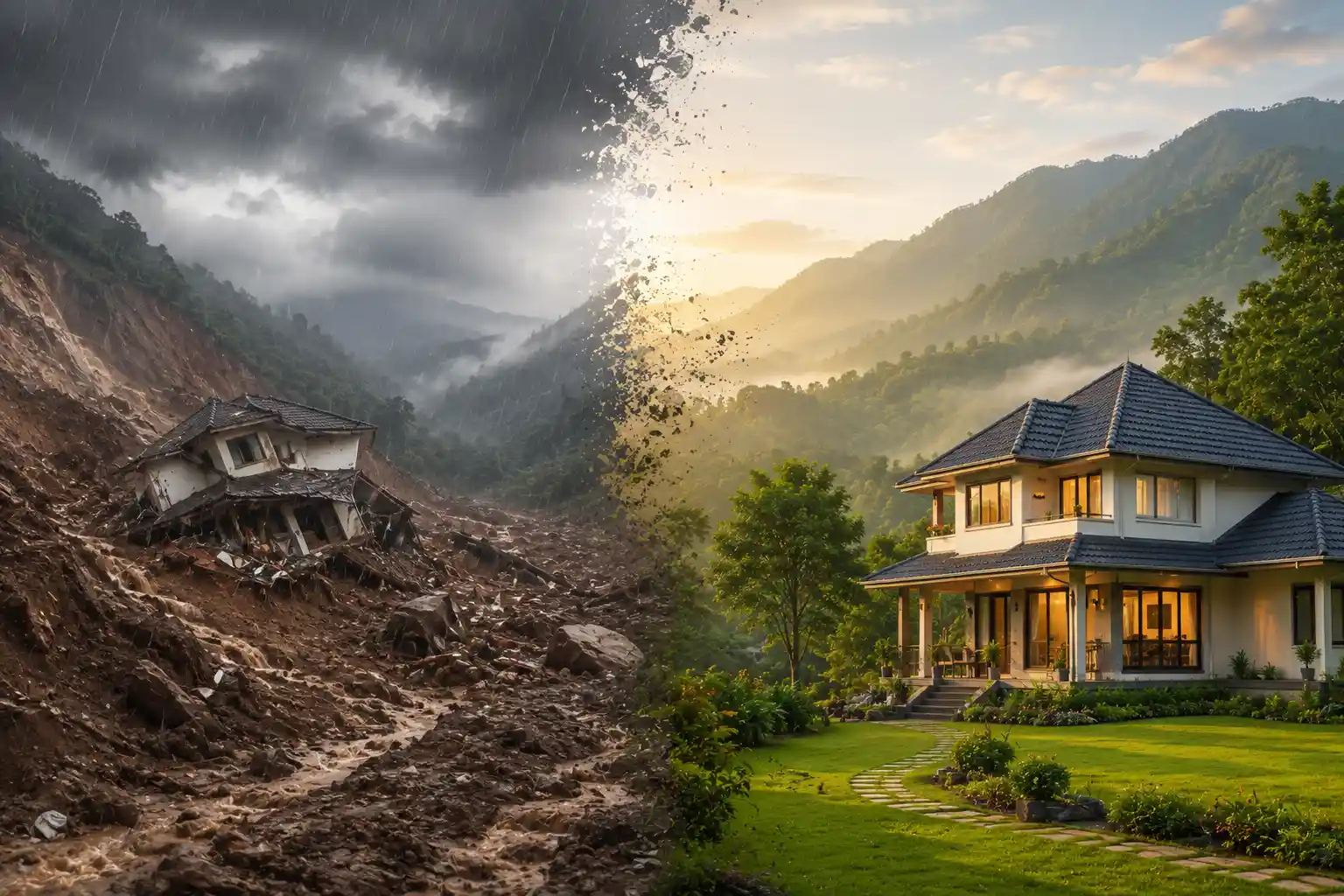
The Wayanad landslide showed how quickly nature can change lives. Heavy rainfall caused soil to become unstable, resulting in landslides that affected homes, roads, and nearby communities. Many families were forced to leave their houses, while others suffered significant property damage.
Although natural disasters cannot always be prevented, careful planning and responsible home buying can reduce unnecessary risks. A beautiful mountain view or a lower price should never be the only reasons for purchasing a home. Safety, accessibility, and long-term stability should always be part of your decision-making process.
The goal is not to create fear but to encourage smarter choices. Every home buyer deserves complete information before investing in a property.
Why Location Is More Important Than Price
One of the most common mistakes buyers make is focusing only on the cost of a house. While budget is important, location has a direct impact on safety, convenience, and future property value.
Before choosing a home, learn about the area's geography. Is the house built near steep hills? Has the locality experienced flooding or landslides in the past? Does the neighborhood have proper drainage during the monsoon season?
A little research today can prevent major problems tomorrow.
If you plan to buy a house in Kerala, always balance affordability with safety. An inexpensive home may become a costly mistake if it is located in a high-risk area.
Essential Safety Checks Before Buying a House
1. Learn About the Area's History
Speak with local residents and ask whether the area has experienced landslides, floods, or severe waterlogging in previous years. Local knowledge often provides valuable information that may not appear in advertisements.
2. Check Government Notifications
Some locations are identified as environmentally sensitive or disaster-prone. Before purchasing a home, verify whether any restrictions or hazard warnings apply to the area.
3. Inspect the Surrounding Landscape
Pay attention to the surroundings rather than looking only at the building.
Check for:
Steep slopes behind the house
Signs of soil erosion
Cracks in retaining walls
Poor drainage systems
Water flowing toward the foundation during rain
These warning signs should never be ignored.
4. Examine Construction Quality
A well-built house offers better protection during extreme weather conditions. Look for signs of structural damage, foundation cracks, leaking roofs, or poor workmanship.
Whenever possible, hire a qualified engineer to inspect the building before completing the purchase. The cost of an inspection is small compared to the cost of major repairs later.
5. Verify Legal Documents
Never purchase a home without verifying all legal documents.
Ensure that the property has:
Clear ownership records
Approved building permits
Valid tax records
No legal disputes
Proper registration documents
Legal verification protects both your investment and your peace of mind.
6. Understand the Drainage System
Kerala receives heavy rainfall every year. Good drainage is essential for protecting houses from flooding and soil erosion.
Visit the property during or shortly after rain if possible. This helps you understand how water moves around the house and whether drainage systems function properly.
7. Evaluate Accessibility
Consider how easily emergency services can reach the location.
Ask yourself:
Is the road usable during heavy rain?
Are hospitals nearby?
Can rescue vehicles reach the house if needed?
Is public transportation available?
These practical questions become extremely important during emergencies.
Think Beyond Today's Needs
Buying a home is a long-term investment. Think about where your family will be five, ten, or even twenty years from now.
Consider nearby schools, hospitals, supermarkets, workplaces, and future infrastructure development. A safe location with good facilities often provides better long-term value than a cheaper house in a risky area.
When you buy a house in Kerala, think about both present comfort and future security.
Work With Trusted Real Estate Platforms
Today's buyers have access to more information than ever before. Use trusted real estate platforms that provide detailed listings, clear photographs, verified documents, and accurate property descriptions.
Avoid making decisions based only on social media posts or verbal promises. Always visit the property, inspect it carefully, and verify every important detail before making any payment.
Professional guidance from experienced real estate experts can also help you avoid common mistakes.
Practical Tips Every Home Buyer Should Remember
Before finalizing your purchase, keep this simple checklist in mind:
Research the neighborhood thoroughly.
Verify every legal document.
Inspect the house during daylight.
Visit the property more than once.
Check drainage and road access.
Understand nearby environmental risks.
Seek professional advice whenever necessary.
Never rush because of a limited-time offer.
A careful buyer makes better decisions.
Building a Safer Future
The recent events in Wayanad remind us that no investment is more valuable than the safety of our families. While nobody can control nature, every buyer can take responsible steps before choosing a home.
Awareness, proper research, legal verification, and professional inspections significantly reduce the chances of making an expensive mistake. A house should provide comfort, security, and confidence—not uncertainty.
If you are planning to Buy House in Kerala, take your time, ask the right questions, and never compromise on safety simply to save money. A well-informed decision today can protect your loved ones and your investment for many years.
Whether you are searching for your first home or comparing a house for sale in Wayanad, always verify the location, inspect the construction quality, understand the area's environmental conditions, and complete all legal checks before making your final decision. Choosing wisely today can help build a safer tomorrow.
Frequently Asked Questions


Trending Property Searches in Kerala
Categories
Categories